
Rubber Sheet
Patterning for mats, flooring, technical rubber and protective surfaces.
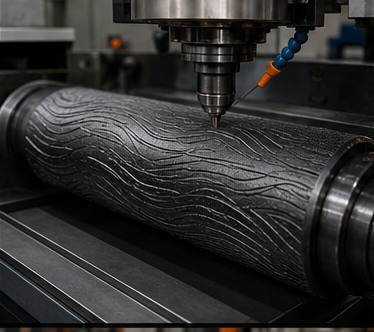
Rubber engraving rollers combine a resilient covering with a machined or engraved surface pattern. Compound hardness, covering thickness and engraving geometry are matched to pressure, temperature and release needs.
Request Technical Discussion +Rubber engraving rollers combine a resilient covering with a machined or engraved surface pattern. Compound hardness, covering thickness and engraving geometry are matched to pressure, temperature and release needs.
Each application has different material behavior, operating conditions and surface expectations. The roller specification is developed accordingly.
Patterning for mats, flooring, technical rubber and protective surfaces.
Controlled contact on coated fabric, films and sensitive web products.
Application-specific grooves, grains and functional patterns.
Rubber hardness can be selected to balance pressure distribution and pattern definition.
A resilient face can reduce marking on sensitive or uneven substrates.
Grooves, grains and functional relief patterns can be machined into suitable coverings.
Worn coverings may be stripped and replaced depending on core condition.
Final dimensions and materials are confirmed against the approved drawing and operating data.
| Cover variables | Rubber compound, hardness, thickness and bonding system |
|---|---|
| Pattern types | Grooves, grains, geometric textures and customer designs |
| Operating inputs | Temperature, pressure, chemicals, speed and substrate |
| Core options | New core manufacture or suitable customer-supplied core |
| Quality checks | Hardness, diameter, runout, bond condition and engraving accuracy |
We review the material, machine arrangement and performance target for this roller.
Roll geometry, surface specification and process parameters are defined for rubber engraving rollers.
Machining, engraving or polishing is completed under dimensional process control.
The finished roller is checked, protected and prepared for domestic or export delivery.
It depends on nip pressure, pattern detail, substrate sensitivity, temperature and chemical exposure.
Yes, if inspection confirms acceptable journal, shell and bonding-surface condition.
Heat-resistant compounds are available, but the operating temperature and exposure duration must be defined.
Share the material, working width, roller drawing and desired surface result for a technical review.