
Aluminium Foil
Fine patterns for packaging, insulation and decorative foil.
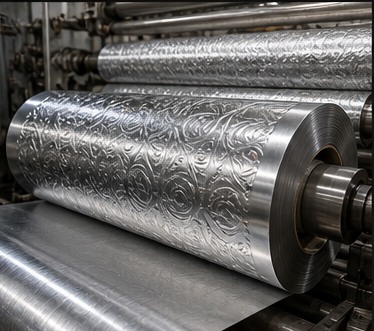
Metal and foil embossing requires strong roller construction, controlled forming depth and accurate alignment. Pattern geometry must create definition without tearing thin foil or overstressing sheet.
Request Technical Discussion +Metal and foil embossing requires strong roller construction, controlled forming depth and accurate alignment. Pattern geometry must create definition without tearing thin foil or overstressing sheet.
Each application has different material behavior, operating conditions and surface expectations. The roller specification is developed accordingly.
Fine patterns for packaging, insulation and decorative foil.
Textures for architecture, interiors and appliance surfaces.
Grip, stiffness and surface-area patterns for technical sheet.
Engraving depth and clearance are selected around metal thickness and ductility.
Roll body and journals are designed for higher nip loads.
Fine patterns and controlled edges help reduce tearing on thin material.
Male-female sets are available for deeper and more defined relief.
Final dimensions and materials are confirmed against the approved drawing and operating data.
| Materials | Aluminium foil, mild steel, stainless sheet and suitable alloys |
|---|---|
| Products | Packaging foil, panels, appliance sheet and technical surfaces |
| Critical inputs | Yield behavior, thickness, width, line speed and forming depth |
| Roll options | Single engraved roll, matched male-female pair or support roll system |
| Quality focus | Registration, load stability, repeat, clearance and pattern definition |
We review the material, machine arrangement and performance target for this industry roller solution.
Roll geometry, surface specification and process parameters are defined for metal & aluminium foil processing.
Machining, engraving or polishing is completed under dimensional process control.
The finished roller is checked, protected and prepared for domestic or export delivery.
Yes, with suitable pattern geometry, edge treatment, tension and pressure control.
It is useful for deeper relief or when the material needs controlled support from both sides.
Material strength, thickness, pattern area, depth and line arrangement all affect load.
Share the material, working width, roller drawing and desired surface result for a technical review.