
Gloss Film & Sheet
High-clarity contact finishing for plastic film and decorative sheet.
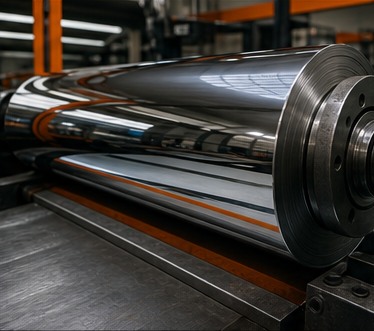
Mirror rollers provide an ultra-smooth contact surface for glossy film, sheet, foil and laminate production. Surface preparation, polishing quality and cleanliness directly influence the finished material.
Request Technical Discussion +Mirror rollers provide an ultra-smooth contact surface for glossy film, sheet, foil and laminate production. Surface preparation, polishing quality and cleanliness directly influence the finished material.
Each application has different material behavior, operating conditions and surface expectations. The roller specification is developed accordingly.
High-clarity contact finishing for plastic film and decorative sheet.
Smooth surface transfer for foil, coated materials and laminates.
Controlled finish for products where clarity and low marking are essential.
Multi-stage surface preparation produces a smooth contact face for glossy products.
Controlled polishing and careful inspection reduce scratches, pits and local defects.
Tight runout and concentricity support a stable contact line.
Finished surfaces are cleaned, wrapped and packed to reduce transit contamination.
Final dimensions and materials are confirmed against the approved drawing and operating data.
| Primary function | Gloss enhancement, smoothing and clean surface contact |
|---|---|
| Surface requirement | Mirror polish selected to product and process needs |
| Common materials | Plastic film, sheet, foil, laminate and coated web |
| Important inputs | Product width, speed, temperature, pressure and release behavior |
| Handling | Non-abrasive protection and moisture-controlled packing |
We review the material, machine arrangement and performance target for this roller.
Roll geometry, surface specification and process parameters are defined for mirror rollers.
Machining, engraving or polishing is completed under dimensional process control.
The finished roller is checked, protected and prepared for domestic or export delivery.
Use non-abrasive approved cleaning materials and avoid tools that can scratch or chemically attack the finish.
Minor damage may be polished or ground out if sufficient material and geometry tolerance remain.
Surface treatment can be evaluated based on wear, corrosion, release and finish requirements.
Share the material, working width, roller drawing and desired surface result for a technical review.